


Real Results for High-Energy Dogs
Built for the dogs that have broken everything else. We surveyed the first 3,000 Palo Pets customers at 30, 60, and 90 days. Here's what they reported.
For the dog that's too smart to be tired out by anything else.
Subtotal: $34.99
Q1: Will my dog actually want to play with this?
Most dogs show immediate interest the first time they encounter the Palo Pets ball. Herding breeds are neurologically wired to respond to objects they can't pick up or carry. The moment your dog bumps this ball with their nose and it rolls away from them, their herding loop fires. They push it, circle it, try to contain it. It activates instinctively! If your dog has ignored toys before, it's likely because those toys rewarded possession, such as picking up, carrying, chewing. That's a fetch loop, not a herding loop. The Palo Pets ball triggers the opposite response: roll, resist, react. That's the stimulus a herding dog's brain needs to expend energy.
Q2: How long will this actually last? Mine keep falling apart.
This is the single biggest complaint about every other herding ball on the market, and the exact reason we built ours differently. Even hard plastic balls get bitten when dogs are frustrated by the surface. Our Palo Pets ball is solid construction. Owners with Belgian Malinois, German Shepherds, and hard-driving Australian Cattle Dogs report months of daily backyard use without damage. It survives the dogs that have broken everything else.
Q3: How is this different from Jolly Ball?
Jolly Balls and Boomer Balls are essentially indestructible, but they're hard plastic, loud on hard surfaces, and the surface provides no satisfying resistance. Dogs either bang them with their muzzle (dental risk) or quickly lose interest. Many were originally designed as horse toys, then repositioned for dogs. Our Palo Pets ball was calibrated specifically for how herding dogs interact with objects: nose-first, chest-led, never bite-first. The material, weight, and rolling behavior are tuned to keep dogs in the herding engagement loop until they choose to stop.
We offer free shipping on orders over $50 to the United States. Please allow up to 3 days for processing.
Delivery Times:
USA: 7-12 business days
International: 15-20 business days

Absolute lifesaver for days when I don't have time for a 3-mile run. If you have a working breed, you know the bottomless energy struggle. Maverick usually destroys 'indestructible' toys in ten minutes, or gets bored of them instantly. He's never been able to go wild for more than 20 minutes with this ball!

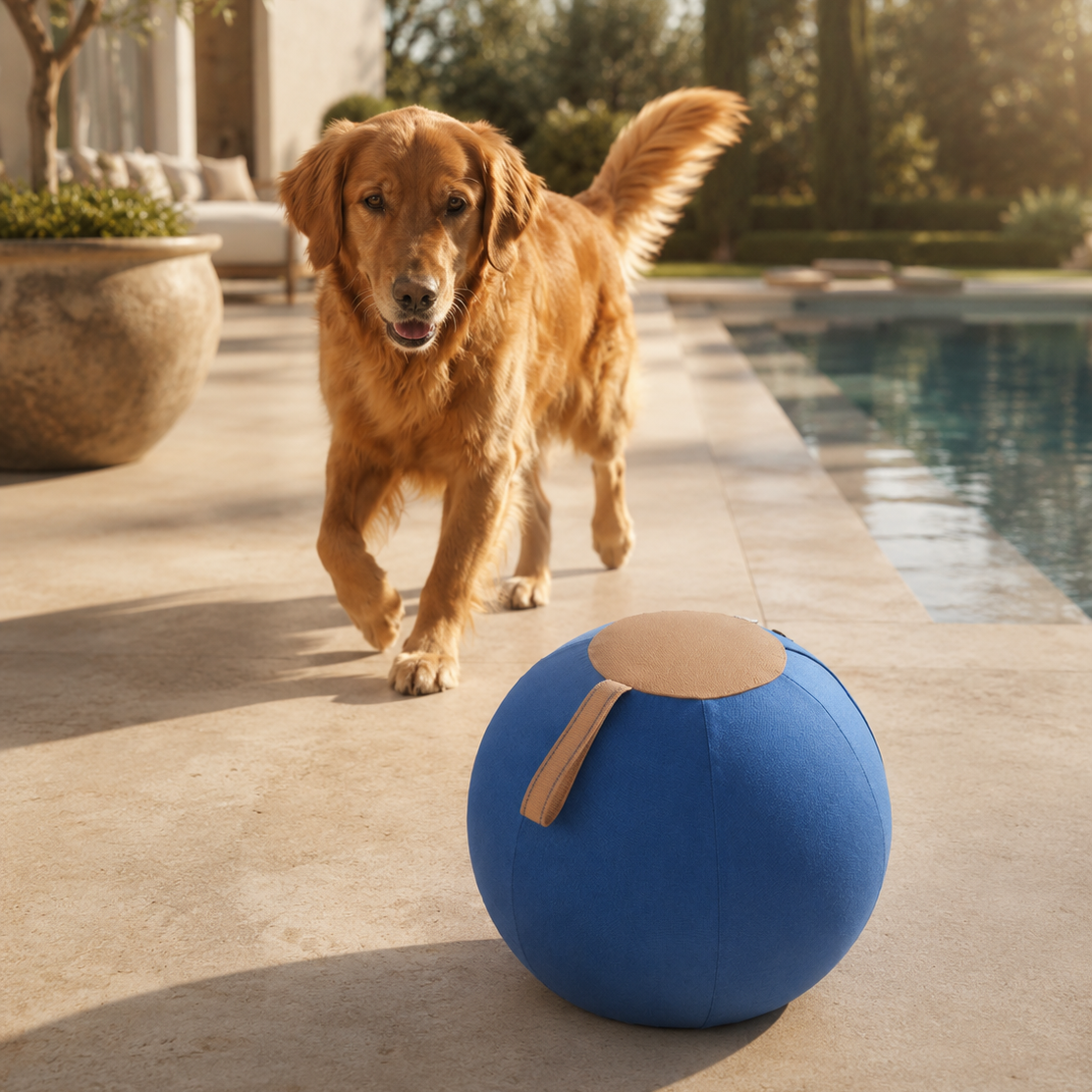
You've Already Tried Everything. This Is What Was Missing.
You know the cycle. Two-hour walk. Another hour at the park. Come home, and 20 minutes later, they're pacing, whining, or pulling the stuffing out of the couch cushions. You've tried puzzle feeders, frozen Kongs, obedience classes, doggy daycare. Here's what no one tells you: The herding drive loop is different. It needs: anticipation, repositioning, nose-led contact, containment. It needs a task with no clear ending. Something that keeps moving, keeps requiring new decisions, keeps demanding that the dog think and act simultaneously. When that loop finally completes? They lie down. Not because they ran out of steam, but because they finished something.

You didn't get a high-energy dog by accident. You got a Border Collie because they're brilliant. An Aussie because there's no other breed that looks at you like that. A German Shepherd because they make you feel like you can take on anything together.
They're not "crackheads." Its simply deprived of one of it's natural instincts.
Built for the dogs that have broken everything else. We surveyed the first 3,000 Palo Pets customers at 30, 60, and 90 days. Here's what they reported.
Were noticeably calmer within their first session
The herding drive loop completes, and when it does, the dog chooses to rest.
Reported decreased destructive behavior within 7 days
A tired, satisfied dog doesn't invent jobs. The biting, digging, and pacing decreases.
Replaced 2 or more toys that had stopped working
Our customers aren't first-time buyers. They've tried the other options.
Every row in this table was written from a real complaint found in reviews for the most popular alternatives on the market. These aren't feature comparisons, they're documented failures. See for yourself.
|
Palo Pets
|
Others
|
|
|---|---|---|
|
Won't pop or deflate
|
|
|
|
Safe on teeth & muzzle
|
|
|
|
Works on grass, gravel, or turf
|
|
|
|
Breaks on the first use
|
|
|
|
Quiet enough to use indoors
|
|
|
Any dog with herding genetics: Border Collie, Australian Shepherd, Australian Cattle Dog (Blue Heeler), German Shepherd, Corgi (Pembroke and Cardigan), Shetland Sheepdog, Belgian Malinois, Bouvier des Flandres, and herding mixes. High-drive non-herding breeds such as Labrador Retrievers, Vizslas, Weimaraners, and working Huskies also respond strongly. If your dog has ever tried to herd children, other pets, or your ankles, they're a candidate.
Most owners notice a difference within the first session, and not a subtle one. Dogs that normally need two or three hours of exercise to settle often choose to lie down after 20–30 minutes with this ball. The reason is that herding breeds exhaust themselves mentally as much as physically, and this ball engages both simultaneously. If your dog has never had a proper herding outlet, the first session can look almost startling, like watching a dog finally understand what they've been trying to do their whole life.
Absolutely. Unlike hard plastic balls that can bruise shins or damage teeth and furniture, our design offers a safer, more forgiving texture. It provides the same professional-grade herding experience without the loud noise or the risk of injury during high-speed, high-energy sessions in your backyard.
You don't need to run alongside them or participate actively. The ball works for semi-supervised backyard sessions — many owners roll it out and let their dog work independently. For the first few sessions, staying visible helps: herding dogs work harder with an audience, and your presence keeps them engaged. Once they're into it, most dogs will work the ball happily on their own in a fenced space.


